

One of the great joys of being a Member of the International Trade Select Committee is that over the last three years, I have scrutinised our trade deals, probed our negotiating objectives and called for greater scrutiny and transparency, as well as gaining a real understanding of the minutiae of how international trade works and how goods and services flow across borders.
It has therefore been perplexing to see the recent import difficulties around vegetables coming from European and non-European countries being laid to rest on the altar of Brexit. For some, any difficulty will always be placed solely on our departure from the European Union, even though many other countries across Europe are suffering from the same levels of shortages as the UK.
A combination of harsh weather conditions in Spain and North Africa, as well as high energy costs in The Netherlands, has seen a reduction in exports of fruit and veg from these countries to many others, as opposed to just the UK. While frustrating, this shortage is simply down to weather and energy conditions.
All shocks to supply chains should give us pause for thought. Two years ago, I was proud to play my part in helping pass the Agriculture Act. Within this Act, there are new measures that require the UK Government to report to Parliament on food security at least once every three years. Such measures are both timely and very necessary.
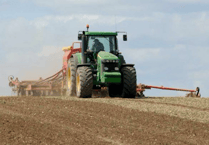


The impact of the pandemic highlighted the fragility of global supply chains as well as pointing out the enormous holes in our domestic production. Gary Streeter MP and I have long been calling for a specific target of 75% food security to be set and met, so the UK can enjoy resilience and security around food sources. In an age of greater volatility and competition, ensuring that we can produce what we need and want would be a sensible measure.
So how do we do this? First, we need to encourage a better understanding of seasonal variety.
At a time when more and more people are rightly concerned about climate change and the impact of global emissions, can we justify eating certain fruit and vegetables all year round? While it is absolutely down to consumer choice, it is also surely appropriate to consider how we can encourage people to think about what is in season and locally produced. This can be achieved through school education as well as by enhancing farmers’ markets and encouraging local businesses to adopt a permanent “buy local” first policy.
Second, we need to look to grow, here in the United Kingdom, some of the fruit and vegetables that we might previously have imported. The Netherlands has created an incredible industry that is helping to supply Europe but there is no reason that we cannot follow suit, especially given the advancements that are being made in the UK’s agricultural sector.
More domestic growth of home-grown plants will not only help us reach our food security targets but also help to create new jobs and opportunities. Government can look to expand capital investment allowances as well as to consider the reintroduction of schemes such as the Super Deduction Scheme.
Third, good quality food has an impact on how we learn, how productive we are, and our health. Yet Westminster policy has been far too disjointed between the Departments of Health, Farming, Environment, Education and Business. This needs to change. If we are to avoid shocks to our supply chains in the future and support local production, then a new Department of Food, Health and Education would go a long way to addressing our national needs.
Our food supply is as important as our energy supply.
We need to look at it through the same lens and ensure that we produce what we need while supporting our farmers and fishermen, helping good quality food circulate through our schools and hospitals, as well as being publicly available and affordable.
Bad weather has reminded us all of our fragility, now is the time to address it!
Comments
This article has no comments yet. Be the first to leave a comment.