

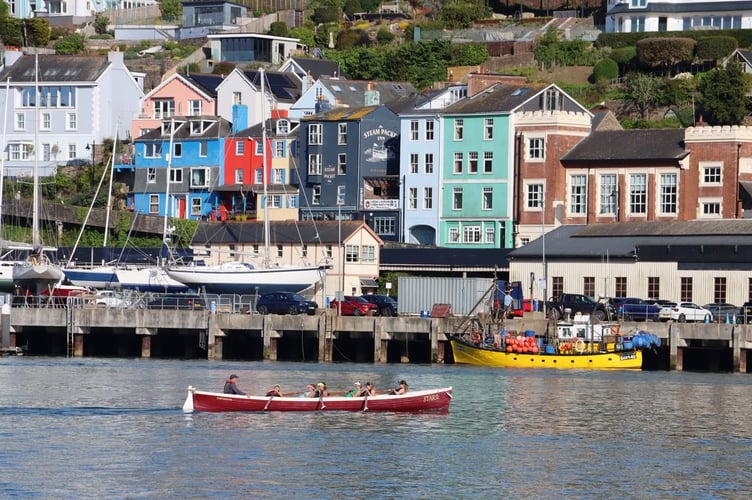
The last two Kingswear Historians’ talks have had a common theme and should have all Dart Estuary residents searching their attics for hidden treasures.
The first speaker was Clare Pawley and she told the tale of the Madre de Dios, a Portuguese treasure ship that was captured and brought into the Dart in 1592.
The Kingswear audience recognised many of the names involved in the piracy and privateering that had been going on between England and Spain during the previous years.
Sir Francis Drake, Raleigh, Sir John Burgh, had all played a part, rotating between being a privateer or a pirate or a member of the English Navy, depending on the politics of the moment.

The Madre de Dios was the largest treasure ship ever to have been captured and after a fierce battle off the Azores, she had been boarded and the Portuguese crew put ashore.
On board, discipline broke down as the English sailors scrabbled for loot.
She then sailed for England, badly damaged and facing storm after storm.
It was decided that she would not make it up the English Channel and she limped into Dartmouth.
Claire described the scene as hundreds of of merchants and jewellers travelled to the port:
“The treasure was meant to be taken back to Queen Elizabeth in London but jewels, gold and spices all found their way ashore.
“The ale houses were full of crew members with secreted items and the Customs didn’t stand a chance.”
It is rumoured that several of her beams can still be seen built into Dartmouth properties.
The whereabouts of the jewelry is not known.
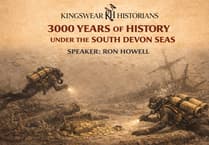
The following talk by Ron Howell, secretary of the SW Marine Archaeological Group, might provide some clues.
Ron has a background as a Navy diver and around fifty years ago, bad weather meant he had to leave his dive site near Wembury, and move to the more sheltered waters of the Salcombe Estuary.
As he explained: “Little did I know then that decision would be life changing.”
On that dive, with a bit of swell and white horses breaking on the shore, he made a discovery of gold coins that not only prompted a change of career for him but also changed archaeological thinking about the routes and distances that the early traders had achieved.
Lying close to each other, were a Bronze Age wreck and a 17th century vessel that was carrying a large hoard of Islamic gold.
Ronald and his team had to learn all the legal issues about declaring treasure finds, learn to negotiate with owners and also bargain with the British Museum about the value of the finds.
He showed pictures of his team members waving antique swords taken straight from the seabed and mounds of gold coins, now safely in the British Museum.
The work of his team has been well rewarded with numerous achievement rewards, visits to Buckingham Palace and meetings with the Duke of Edinburgh.
The next talk from Kingswear Historians is on V.W. MacAndrew, from The Dart to the Red Sea.
It will be given by Jonathan Turner on April 13.
Comments
This article has no comments yet. Be the first to leave a comment.