
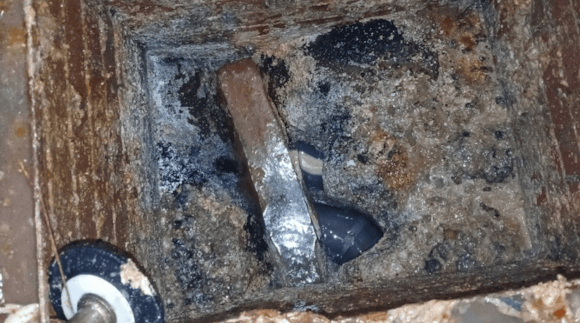
Fats, oils and grease (FOG) have been blocking drains beneath food businesses across the South Hams.
Inspections by South West Water revealed large amounts of FOG in drainage systems serving food businesses across the district.
The company is sharing examples of the work carried out by its teams during the busy summer season to support food businesses in managing FOG and reducing the risk of avoidable sewer blockages, and flooding.
Teams visited cafés, restaurants, takeaways and ice cream parlours across Devon to check drainage systems and worked with businesses to identify where improvements could be made.
Images captured during visits over the summer reveal just some of the FOG build-up found beneath food premises, and show why keeping it out of drains is so important
The visits showed how quickly fats, oils and grease can build up when existing controls are not working as effectively as intended.
South West Water worked alongside business owners to review waste management arrangements and identify practical improvements to help reduce the amount of FOG entering drainage systems.
From maintaining grease traps to improving waste disposal practices, small changes can make a big difference in helping prevent blockages, flooding and pollution incidents.
FOG is a major cause of avoidable sewer blockages. When poured down sinks and drains, it cools and solidifies, gradually building up inside pipes and restricting the flow of wastewater.
When combined with other items such as wet wipes that are flushed down toilets, fats, oils and grease can contribute to stubborn blockages known as fatbergs, which can lead to flooding and pollution incidents.



Adrian Robinson, Team Manager of the Sewer Network Protection Team at South West Water, said: “What happens beneath food businesses can have a real impact on the sewer network.
“Our visits over the summer highlighted how quickly FOG can build up, especially at restaurants and cafes, and the importance of making sure it’s disposed of correctly.
“Many businesses already have measures in place for FOG like grease traps, but it’s important these are regularly checked and maintained to ensure they are working effectively.
“By working with businesses to identify issues and share practical advice, we can help prevent blockages, reduce the risk of flooding and pollution, and protect the environment.”
The work forms part of South West Water's ongoing efforts to tackle avoidable sewer blockages and protect customers, communities and the environment.
Last year, South West Water cleared more than 5,500 avoidable blockages from its network, many linked to FOG, alongside items such as wet wipes and sanitary products entering the wastewater network after being flushed down loos.
South West Water is encouraging businesses and households to think about what goes down their drains and toilets, and the role everyone can play in helping prevent blockages, flooding and pollution incidents.
South West Water is encouraging businesses and customers to: not pour fats, oils or grease down sinks and drains,
scrape leftover food into the bin before washing up, regularly maintain grease management equipment such as grease traps and interceptors, dispose of food waste and cooking oils appropriately.
Only flush the three Ps: pee, poo and paper.
Comments
We've recently changed our login process. If you have an account for commenting, you will need to re-register on the login window.
This article has no comments yet. Be the first to leave a comment.