
From the food and drink on our festive tables to the Christmas trees in our living rooms, fungi are woven into the fabric of the festive season in many ways, some familiar and some unexpected.
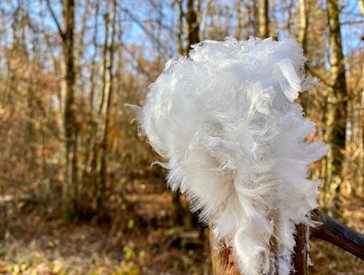
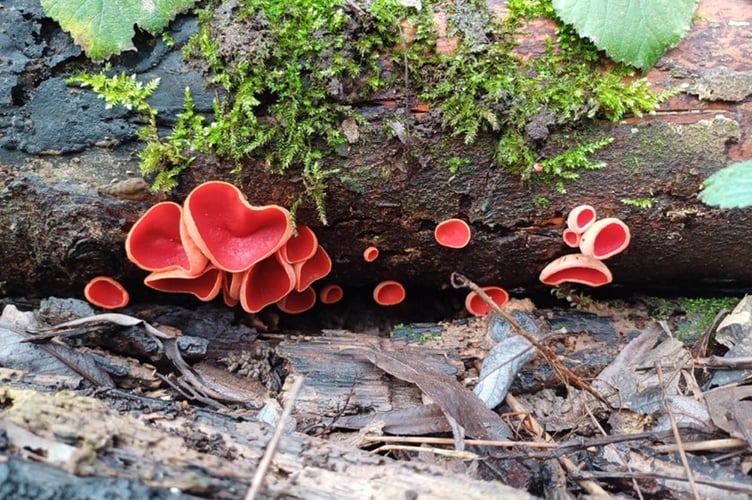
Out in the winter woods, a surprising number of fungi can withstand our early frosts. The aptly named Winter Fungus often fruits on dead wood during the coldest weeks; its cultivated form, enoki, is also a favourite in oriental cuisine. The Turkey Tails bracket fungus, with fan-shaped, striped felty fruiting bodies, adds a natural festive motif to fallen logs. Colourful, glistening waxcaps provide excitement during many walks in December, with the aptly named Snowy Waxcap sometimes bringing a dusting of white to pastures even before the first snow arrives. The festive season’s palette is also brightened by vivid Scarlet Elf Cups, which can be found on fallen branches like tiny ornamental bowls. Perhaps most magical of all is the occasional appearance of “hair ice” - thin, delicate, silky frost that is produced when a fungus called Exidiopsis effusa drives water out of decaying wood in cold weather, shaping it into fine filaments that resemble Santa’s beard! If it snows in Devon on Christmas Day, it might be due to the deposition of water on fungal spores in the atmosphere!
The fermentation of sugars by Saccharomyces yeasts has shaped our winter celebrations for centuries. Without yeasts, there would be no Christmas beers frothing in pub glasses, no sparkling wines raised in toasts, and no festive panettone on our tables. Traditional blue cheeses, mushroom pâtés, and truffle-infused treats all depend on fungi to deliver their characteristic flavours and aromas. Chocolates on the Christmas tree are dependent on fungal metabolism, with complex esters and alcohols imparting sweet honey and fruity notes to bitter cacao during the chocolate production process. The prices of both chocolates and coffee are strongly affected by crop yields, determined in part by our ability to control fungal diseases. In the 1960s, Turkey X-disease ravaged the poultry industry, due to contamination of animal feedstocks by mycotoxin-producing moulds, affecting the price of one of our Christmas menu staples.




Christmas trees have very strong links to fungi. All conifer trees form intimate underground partnerships with mycorrhizal fungi, which help them efficiently absorb water and nutrients in challenging soils—a particularly advantageous association in frosty, cold northern climates. Our Christmas trees also face many fungal threats. Diseases such as root rot, red band needle blight, and canker are all caused by fungal pathogens that can limit the health and longevity of plantation-grown firs and spruces.
Fungi are also making a new appearance beneath the Christmas tree. Mycelium-based packaging, grown from fungal networks and agricultural waste, offers a compostable alternative to plastic-filled gift boxes. Whilst those with a flair for fashion might be wishing for a new handbag made from Mylo, a vegan-friendly, mycelium-based alternative to leather.
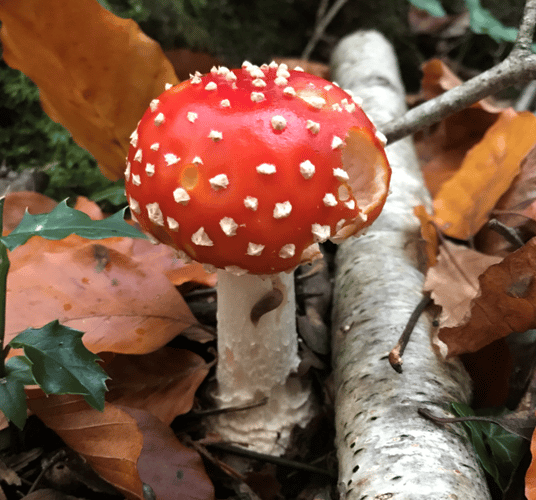
Perhaps no fungus feels more ‘Christmassy’ than Amanita muscaria, the red-and-white spotted Fly Agaric. Links with Siberian shamanism have inspired stories of flying reindeer, and even the origins of Santa Claus! Enchanting tales told by shamans under the psychedelic effects of the Fly Agaric toxins may even have created the idea that Santa Claus brings the greatest gift of all, knowledge. Ethereal visitors entering yurts covered in snow through the open chimney…
So as you celebrate this Christmas, raise a glass to the fungal world that quietly underpins aspects of our festive season, shapes our traditions, and adds a little magic to the winter landscape. If you wish to find out more, consider joining the Devon Fungus Group for a foray in 2026 – see https://devonfungusgroup.uk. A merry ‘fungussy’ Christmas to everyone.
Professor Mark Ramsdale - Fungal Education and Outreach, British Mycological Society
Comments
This article has no comments yet. Be the first to leave a comment.