

The community has been responding after South West Water was ordered to pay £1.93 million for supplying water unfit for human consumption during the cryptosporidium outbreak.
Tourism businesses, hospitality venues and community organisations across Brixham and the surrounding area reported significant disruption as national headlines focused on contaminated drinking water in one of Devon's busiest visitor destinations.
Dart Harbour Master and CEO, Paul Britton, said the effects were felt throughout the region.
"It's always described as being Brixham, but it was more than just Brixham," he said.



"It got to Kingswear. As a harbour authority, we've got water supplies coming from both sides of the river, so half of our water supplies were out. It was a very awkward time for us.
"I'm also chair of Explore Dartmouth, the local tourism board, and it was a massive thing from a tourism point of view because if you hear 'don't go to Brixham because you can't drink the water', you start losing visitors.
"So I'm really pleased they've been fined. I know they've also put a lot of money into the community. I suspect a little bit more wouldn't have been a bad thing, but at least something has been done."
South Devon MP Caroline Voaden went further and described the punishment as insufficient.
"It is disappointing after this lengthy saga to see South West Water escape with such a small fine," she said.
"The primary purpose of a water company is to supply clean drinkable water to its customers. On that count, SWW clearly failed.”
Following the hearing on Tuesday, June 2 at Exeter Magistrates’ Court, public health lawyer Jatinder Paul - who previously represented a group of affected residents through civil proceedings against South West Water - said many people continue to suffer ongoing health problems two years later.
"Cryptosporidium is a serious water-borne infection, and its effects should not be downplayed," he said.
"It's been two years since the outbreak, and many of those we represent continue to be greatly affected by their illnesses. Some have gone on to develop conditions such as irritable bowel syndrome, while others have been hospitalised and continue to suffer with the psychological impact."
South West Water had already admitted liability in the civil claim involving residents aged between eight and 60 who became ill after drinking contaminated tap water.
Among them is 10-year-old Rafferty Watts from Brixham.
His mother, Jennifer Watts, said the effects of the infection continue to shape family life more than two years after the outbreak.
She first became concerned when Rafferty stopped eating and struggled to swallow.
Within days, he developed severe diarrhoea, abdominal pain and heartburn before tests confirmed cryptosporidium infection.
After multiple hospital visits, Rafferty was admitted for three nights and required treatment including intravenous fluids.
Jennifer said her son lost a significant amount of weight during the illness and has since developed complications including post-gastroenteritis constipation, obsessive-compulsive disorder and avoidant restrictive food intake disorder.
"One of my biggest fears is that life will never be the same again after this experience," she said.
"It was terrifying to watch Rafferty's symptoms get worse and not go away. Before he fell ill, he was happy, confident and outgoing.
"He associates eating and drinking with his illness, so he has struggled with this ever since because he's scared of falling ill again.
"It's worrying that what happened to us happened to so many people. I'm pleased the water company has been held accountable, especially if it reduces the risk of something similar happening again."
Yet alongside relief at the conviction, concerns remain about who will ultimately bear the cost.
Some residents fear penalties imposed on water companies eventually find their way back to customers through higher bills.
Others question why no individual executive has faced personal consequences for the failures identified by the court.
During sentencing, South West Water said it had already incurred around £38 million in costs linked to the outbreak, including £11 million in compensation payments and more than £7 million spent providing alternative safe water supplies during the emergency.
Its legal team argued the company had gone "above and beyond what other companies would do" in responding to the crisis and that these efforts should be reflected in sentencing.
For many in South Devon, however, the case has become about more than a financial penalty.
It has raised broader questions about oversight, accountability and public confidence in the companies responsible for providing essential services.
More than 140 people were confirmed to have contracted cryptosporidium, a waterborne parasite that can cause severe gastrointestinal illness, after the contamination entered the public water network. Ten people required hospital treatment.
South West Water (SWW) was ordered to pay £1.93 million after pleading guilty to supplying water unfit for human consumption during the cryptosporidium outbreak.
District Judge Stuart Smith described the company's conduct as a "serious failure" and a "systemic failure of governance" as he imposed a £1.853 million fine, £75,000 in costs and a £2,000 victim surcharge.
The prosecution, brought by the Drinking Water Inspectorate (DWI), centred on the contamination of the Littlehempston Water Supply Zone between March 31 and June 1, 2024, which resulted in nearly 150 confirmed cases of illness and left thousands of residents under boil water notices.
While acknowledging the significant impact on public health, local businesses and vulnerable residents, Judge Smith reduced the penalty to reflect South West Water's early guilty plea.
The court heard legal arguments over whether the offence should be treated as an environmental breach or a food safety matter.
Judge Smith concluded that because the case involved drinking water supplied for human consumption, it fell under food safety legislation.
Central to the hearing was the question of responsibility.
South West Water admitted the offence but argued it could not have prevented the outbreak because the defects that allowed contamination into the network were located on private land and had not been brought to the company's attention.
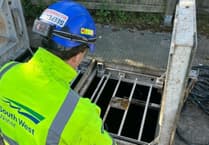
Investigators identified two likely sources of contamination at Hillhead Farm near Brixham: a damaged air valve chamber and illegal cross-connections between a private water supply and the public mains network.
The farmer involved previously accepted a caution in 2025 after admitting the unauthorised connection, stating he had been unaware that such arrangements breached regulations.
South West Water's defence also suggested the air valve chamber lid may have been deliberately removed without the company's knowledge, preventing maintenance teams from identifying the problem.
However, Judge Smith concluded that the company had failed to implement an effective inspection regime despite years of warnings from regulators.
"The reality is that there was no visual inspection scheme in place," he told the court.
Evidence presented during the hearing showed the damaged air valve chamber had become filled with soil, silt, debris and water, restricting the valve's ability to operate correctly.
DNA analysis later linked cryptosporidium found near the site to the same strain detected in infected residents.
Although South West Water maintained that regular inspections had been recommended rather than legally required, the judge found the company had failed to take adequate preventative action.
He said the utility's response to the crisis had been largely reactive rather than proactive and criticised what he described as failures in governance and risk management.
For many residents, however, the consequences extended far beyond the initial outbreak.
South West Water are due to appear at Plymouth Magistrates’ Court on July 30, 2026, after pleading guilty to 18 illegal sewage spills across Devon and Cornwall between 2015 and 2021.
Comments
We've recently changed our login process. If you have an account for commenting, you will need to re-register on the login window.
This article has no comments yet. Be the first to leave a comment.