


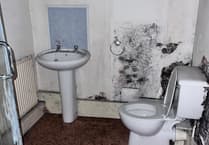
Damp is a serious problem, both for your home and your health, and it is important to deal with it and try to find the cause. Damp air is also more difficult to warm up, which can result in higher heating bills. The issue of damp and mould has been recently highlighted by the tragic death of Awaab Ishak, a two-year old child, as a direct result of mould in his family home in Rochdale.
Damp and mould are common problems particularly during the colder months with one of the main causes of damp being condensation. Condensation is water that is created when excess moisture in the air comes into contact with cooler surfaces. It usually indicates an issue with poor ventilation, inadequate heating, construction type or surface temperature. If left unchecked mould will start to develop on damp surfaces.
In our Environmental Health Officers’ experience, condensation and mould growth have been too easily labelled a lifestyle issue. Many properties suffer from damp and mould whatever their type or age. It can cause significant damage to properties and to the physical and mental health of occupiers.
Partners South Hams District Council, South Hams Citizens Advice and South Dartmoor Community Energy are working together to support residents with the rising cost of living, including finding support and solutions for damp and mould.



Cllr Nicky Hopwood, South Hams District Council’s Executive Member for Cost of Living, said: “Damp and mould can be very dangerous as we’ve so tragically become aware of after the death of Awaab Ishak. Very young and old family members, as well as those who suffer from Asthma and similar respiratory conditions are more at risk; however, it can cause issues for even the fittest of people.
“It is usually the coldest parts of the home where you will find the moisture that causes condensation and mould. In the corners of rooms, around windows, and hiding behind furniture, but it can usually be sorted, in most cases, with a few simple steps.”
• Try to avoid drying clothes on radiators/indoors as this can release moisture. If you have no choice make sure you adequately ventilate the home.
Open your windows and cover pans when cooking, close your kitchen or bathroom door when using extractor fans, extractor fans won’t add much to your electric bill but it will be a great help in terms of reducing the moisture, particularly during the winter months.
Open your windows regularly to replace damp air with dry air, especially in the morning.
Try to keep air vents in walls and doors free of blockages. If you have a tumble dryer make sure is vented to the outdoors.
Avoid overfilling your wardrobes and cupboards and move furniture away from walls, remove clutter from rooms, allow the air to flow around the room. Check the level of insulation and whether the heating is working as it should be.
If mould is starting to grow, don’t let it spread. Use an anti-mould spray and wipe dry areas of condensation before it can build up.
Beds themselves absorb about half a pint of moisture per person each night. To keep your bed and pillows fresh do not make your bed in the morning but leave the covers open to air out as much as possible.
Condensation from windows should be mopped up every morning and the water put down the sink. A window vac can make this task much easier.
Kitchens and bathrooms are often a source of warm humid air from cooking, kettles, showers etc. Keep the doors into the rest of the property closed and open a window or use an extractor fan.
Remember that when drying clothes indoors, all of the water that is in them when you take them out of the machine can end up in the walls, ceiling and furniture of your home as they dry. Wherever possible dry outdoors or if needed in a tumble dryer (use of tumble drier balls can reduce energy use by up to 40 per cent).
If your home is still suffering from damp and mould after you’ve taken these steps, then there may be an underlying problem and you may have to get the advice of a damp specialist.
If you are a tenant, put your concerns in writing to your landlord, stating the problem, where it is and what steps you have taken to try to resolve it. The Council encourages positive discussions between tenants and landlords to try to resolve such issues. If your landlord is not willing to help, the Environmental Health team at the Council can often intervene.
Nicky Puttick from South Dartmoor Community Energy, said: “This Winter has seen the majority of us use our heating less, and as a result of this many people are noticing increased damp and mould in their homes. In the same way that we’ve all adapted to using less energy around the home, there are simple behavioural changes we can make to help alleviate condensation, damp and mould. The team at SDCE offer free and impartial guidance and support with any energy-related issues in the home, including damp. See www.sdce.org.uk for details of how to request our support.
With the cost of living crisis many residents may be restricting their heating. This is likely to cause more damp and mould problems. The steps above are free or cost little to do and residents need to heat and ventilate as much as their budget allows.
Further advice and help can be found on the Council’s support pages, which contains a wealth of information about a wide range of cost of living subjects.
Eligible residents will be able to access free energy advice, financial help and grants to improve the energy efficiency of the home. Residents can access help and advice via the Council’s website: www.southhams.gov.uk/cost-of-living-help
Cllr Hopwood added: “If your damp problems can’t be easily sorted, there is some funding available to help on the Government’s Help for Households webpage, which you can find on our Support Directory or if you can’t go online, please call us on 01803 861234 and speak to our Environmental Health team.”
There is further help for residents who are on lower incomes. The Council works closely with Citizen Advice and local community energy groups.
Citizens Advice offer advice about this subject in their January Advice Column. For more information go to: https://southhamscab.org.uk/january-advice-column
You can also find a factsheet on dealing with damp and other helpful information at:
www.sdce.org.uk
Comments
This article has no comments yet. Be the first to leave a comment.