

Half of England has now been officially declared in drought, with Devon and Cornwall among seven regions facing the most severe level of dry weather after one of the driest Julys on record.
The Environment Agency announced on Wednesday, July 29, that the region has moved from prolonged dry weather into drought status following weeks of exceptionally low rainfall, soaring temperatures and falling river levels.
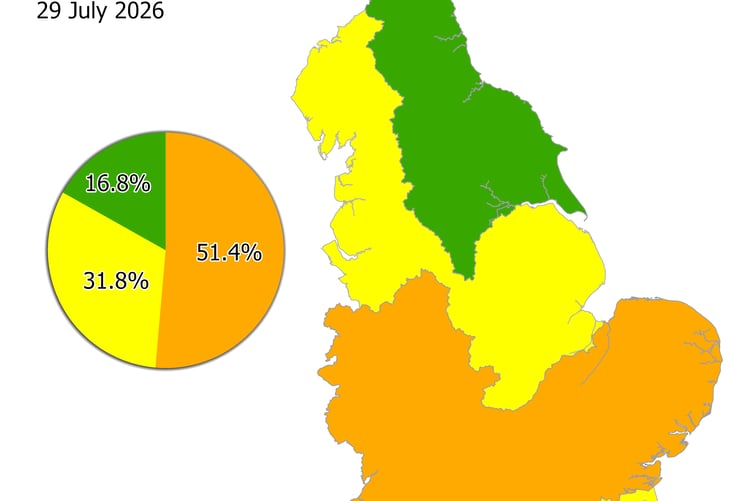
The declaration comes as parts of Devon have gone 50 days without measurable rainfall, while reservoirs, rivers and groundwater supplies continue to decline across the South West.
Environment Agency officials said the combination of prolonged hot weather and very low rainfall had created a "flash drought", a type of drought that develops rapidly when high temperatures intensify dry conditions.
Helen Wakeham, the Environment Agency's director of water and chair of the National Drought Group, said: "The hot and dry weather means we are currently using water faster than nature can replenish it.
"A second consecutive summer drought is an exceptionally serious situation and one that will have long-lasting impacts on our environment, wildlife, and the economy.
"We want everyone to stay safe and hydrated during the hot weather, but every drop we can save is a drop more for nature and agriculture."
The Environment Agency said July has received just seven per cent of its long-term average rainfall across England, dropping to as little as one per cent in parts of southern England. Three heatwaves, including 12 consecutive days above 30C, have accelerated the loss of water from reservoirs, rivers and soils.



The latest figures show that 78 per cent of England's rivers are now below normal or below average for this time of year, with one in six classed as exceptionally low.
Reservoir storage has fallen to 75.3 per cent nationally, around 7.4 per cent below the seasonal average, while several Devon reservoirs are well below their expected levels.
The latest figures from South West Lakes Trust show that Roadford Reservoir, the county's largest, is 75% full, while Burrator stands at 63%, Wistlandpound at 62%, Fernworthy at 67%, Venford at 63% and the Kennick, Tottiford and Trenchford group at just 51%.
Meldon Reservoir is at 81% and Avon Reservoir at 79%.
While reservoirs typically fall during the summer as demand increases and evaporation rises, South West Water says storage is lower than normal in some parts of the region following an exceptionally dry spring and summer.
Water Minister Emma Hardy said droughts were becoming "the new normal" as the climate changes.
She said: "We're delivering long-term change in the water industry and driving record investments in infrastructure, including nine new reservoirs.
"We expect water companies to follow their drought plans, to go further and faster to reduce leaks, and to ensure supplies are not disrupted even in the driest of weather."
The Environment Agency said it had stepped up its response by increasing monitoring of rivers and groundwater, restricting water abstraction where necessary and working with farmers, water companies and conservation groups to manage supplies.
Despite forecasts suggesting some unsettled weather during early August, the Met Office warned there is currently little indication of the prolonged, widespread rainfall needed to significantly improve conditions.
Officials are urging households to conserve water by taking shorter showers, turning off taps while brushing their teeth and fixing leaks. Adding that small reductions in water use will help protect supplies for people, agriculture and wildlife until sustained rainfall returns.
Comments
This article has no comments yet. Be the first to leave a comment.