
We have had another mild but wet and windy winter where many wildlife sites became hard going due to deep sticky mud on paths. I am increasingly finding that simply standing upright is becoming more difficult when one wellie is stuck and my foot slides out of the other one.
Even short spells of spring sunshine have frequently been patchy with showers and a gusty breeze. This variable weather has caused confusion with the wildlife where some plant and animal species are appearing over a month early while others have been hard to find.
Once again, there has been a shortage of many overwintering birds which probably found suitable conditions elsewhere, so they never bothered to fly this far south.
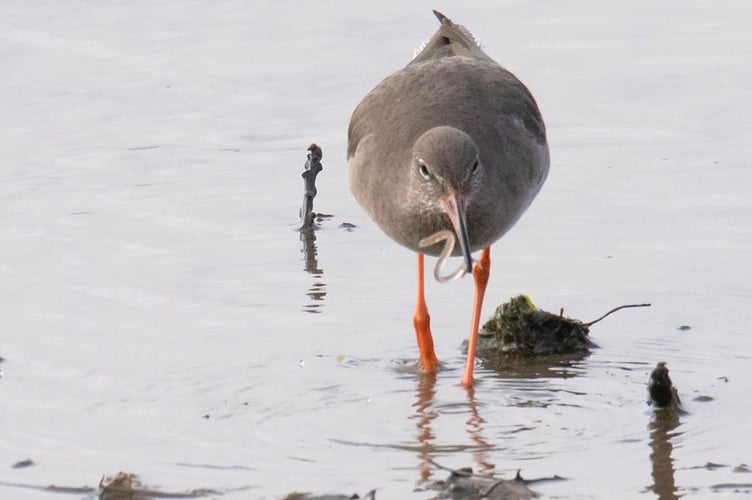
I failed to see several bird species which previously were common here. However, I did find two Redshank probing into the muddy estuary water with their long beaks and obviously finding a good food source. I managed to photograph one bird with something in its beak and when I examined the photo I saw it had caught itself a small elver.



Wetter conditions are also affecting plants. For several years, I have grown Echium plants in my garden. It takes at least 2 years before they produce a tall flower spike that can reach over 8 ft and is covered with small nectar rich flowers which are extremely attractive to a wide range of bees.
One frequent problem with echiums is that they often succumb to a hard frost, but this winter I lost several plants to root rot in the damp soil. Some wildflowers prefer wet conditions and one of them is Golden Saxifrage, there are two very similar species with slightly different leaves.
Although the flowers are small their attractive bright golden colour makes them easy to find and closely spaced individual plants form attractive creeping mats in spring woodland. There have been some good clumps in Andrews Wood.
A few species of butterflies will spend the winter in a state of semi hibernation and some, such as the Peacock, can even be found flying on mild days throughout the winter. They have done particularly well this spring.
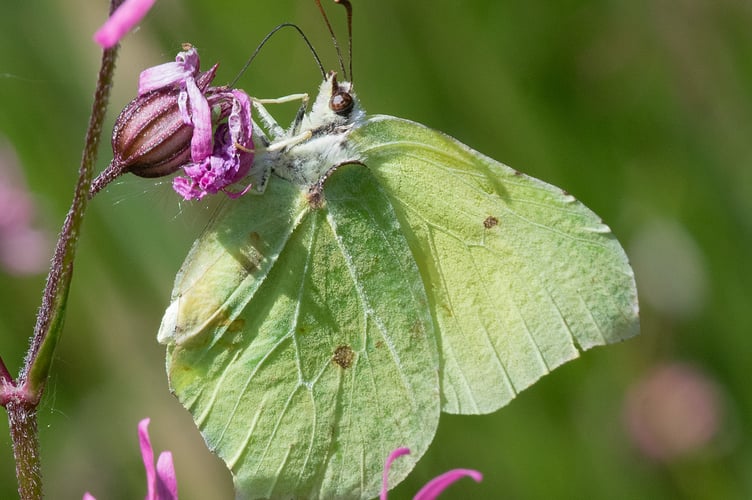
A few early Holly Blue butterflies always appear in my garden but they can often be found wherever holly is growing. Their caterpillars also feed on ivy and a few similar plants. Large yellowish rather square shaped early butterflies with a somewhat unsteady flight will usually be Brimstones, with males frantically searching for a mate.
They are paler than the females so can be mistaken for Large Whites, which usually appear during April.
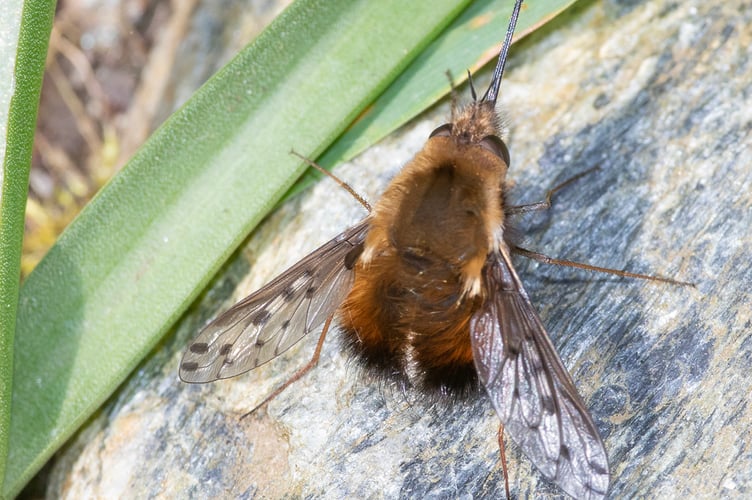
Male Orange-tip butterflies are obvious even when flying and seem to be around in good numbers this year, but on the downside, I have only seen a few Red Admirals and no Commas. The strange looking Bee-flies are doing well this year and I have regularly found them at various locations, particularly where good numbers of primroses occur.
There are two very similar spring flying species.
The commonest species is the Dark-edged Bee-fly which, as its name suggests, has an obvious wide blackish area on the leading edges of its wings while the rarer Dotted Bee-fly has dark spots over this area. At Soar Mill Cove, I had three Bee-flies flying around me but none of them would settle for more than a few seconds so I was unable to get a confirmation photo. Eventually I diverted to a spot where I had previously found some Oil Beetles and quickly spotted a Dotted Bee-fly nicely posed beside a Violet Oil Beetle.
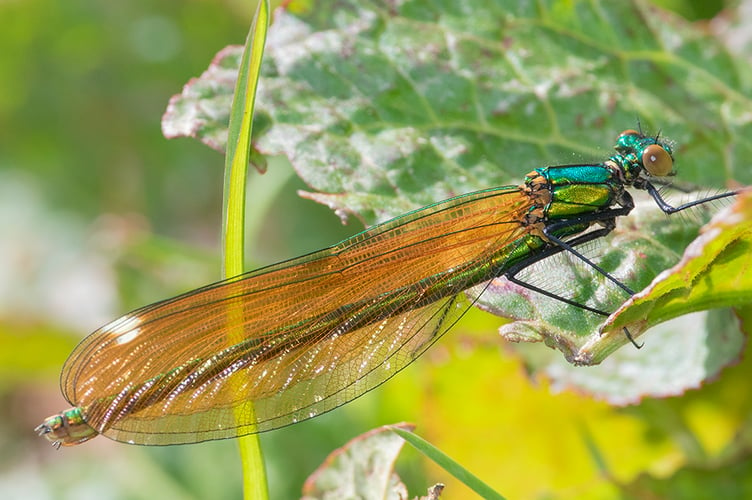
I find Violet Oil Beetles are usually an inland woodland species while the very similar Black Oil Beetles have a much wider range of habitats. Dotted Bee-flies seem to be mostly coastal. A recent surprise was finding a Beautiful Demoiselle, which is a type of damselfly, that was over a month early and a few Large Red Damselflies have appeared at some locations.
Comments
We've recently changed our login process. If you have an account for commenting, you will need to re-register on the login window.
This article has no comments yet. Be the first to leave a comment.