
Dennis Elphick, of Gidleys Meadow, Dartington, writes:
Over the past 30-40 years, the numbers of farmland/ woodland birds in southern Britain have declined by as much as 40-90 per cent, depending on the species.
A recent report – The State of Nature 2016, endorsed by Sir David Attenborough – states clearly that the primary cause of this massive decline is the result of intensive farming practices and the use of insecticides and pesticides, with a secondary cause being global warming.
This year has also seen a huge decline in butterflies and over the years insects, on which many species of farmland/woodland birds rely to survive.

.jpeg?width=209&height=140&crop=209:145,smart&quality=75)
In contrast, the human species is increasing almost exponentially, with little or no regard as to the impact this is having on the planet.
Whether we like it or not, human beings are part of the global ecosystem, which we seem intent on destroying. All other species – birds, insects, animals etc – come from the same evolutionary root-stock as ourselves and live within their evolved limitations, but humans do not seem to live up to their classification of Homo sapiens and are so wasteful, greedy, ignorant and arrogant as to destroy their own life-support system.
We currently face the sixth period of mass extinctions, similar to that which wiped out the dinosaurs, and the first to be caused by human activity.
On the plus side, cetaceans – whales, porpoises etc – and other marine life are extending their ranges ever northward as the sea around our shores becomes more suitable for their survival. Scientists have recently named the current geological epoch – eg Cambrian, Devonian, Carboniferous, Silurian etc – as Anthropocene, ie man-made.
North of the Liverpool, Manchester and Leeds conurbations, where arable farming gives way to uplands and hill farming, numbers of birds are thriving because the food supply – ie insects – is still available.
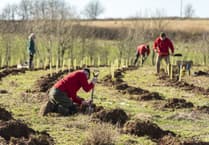
On another front, this is why it is so important to have wildlife corridors – to provide sustainable wildlife populations, as at Brimhay.
Comments
This article has no comments yet. Be the first to leave a comment.