
The Pharmaceutical Journal has recognised University Hospitals Plymouth NHS Trust’s life saving treatment for patients who have taken a drugs overdose.
The hospital-based take-home Naloxone programme is a safe, life-saving medication that reverses opioid overdose.
While it has traditionally been supplied through community drug services, UHP identified hospital admission and discharge as a critical opportunity to reach patients at highest risk — particularly those not engaged with other services.
In 2022, UHP established a multidisciplinary Substance Use Steering Group (SUSG) to improve care for patients with substance use disorders.
.png?width=209&height=140&crop=209:145,smart&quality=75)



One of the group’s early priorities was embedding harm-reduction approaches across the trust, including routine access to take-home naloxone.
Pharmacy teams played a central role in implementation by adding naloxone to the trust formulary, developing clear eligibility criteria and introducing a standard operating procedure to support safe and consistent supply.
Naloxone is now stocked in high-risk areas such as the Emergency Department and assessment units, with pre-labelled “to-take-away” packs enabling timely supply at discharge.
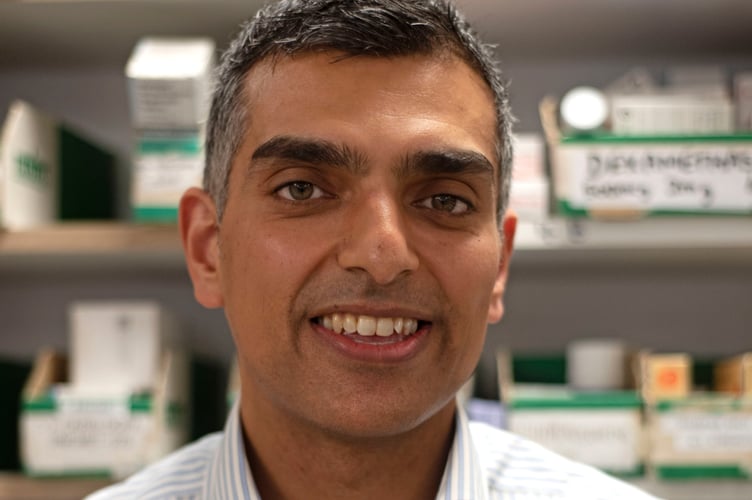
Vivek Soni, Deputy Chief Pharmacist said: “Hospital admission and discharge, particularly through urgent and emergency care, give us a vital chance to reach people at highest risk. “Our pharmacy teams have been central to embedding naloxone into everyday practice in these areas, making it easy and safe to supply when it matters most.
“I am hugely grateful to our pharmacy colleagues for their commitment, and to Dr Ben Jameson for his collaboration and support in driving this work forward.”
Since targeted re-engagement across clinical areas, uptake has increased steadily, with naloxone now being supplied across multiple wards.
The programme continues to expand, with plans to embed naloxone access more widely during 2025.
Education and staff confidence have been key to success. UHP developed tailored training resources, including a short video, and worked closely with local drug and alcohol services to support learning and reduce stigma.
Dr Ben Jameson, Clinical Lead, Health Inclusion Pathway, Plymouth says, “We’ve only been able to supply naloxone through a collaboration across the hospital and community. “There’s sustained interest from colleagues in other parts of the country as to how to achieve this.
“There’s still plenty to do to improve services for people who use drugs. I’m really grateful to our pharmacy colleagues for continued support and innovation.”
UHP’s work demonstrates how acute hospitals can play a vital role in preventing avoidable drug-related deaths, reinforcing the trust’s commitment to compassionate, patient-centred care.
Naloxone is useful in treating both acute opioid overdose and respiratory or mental depression due to opioids.
It is included as a part of emergency overdose response kits distributed to heroin, fentanyl, and other opioid drug users, and to emergency responders.
This has been shown to reduce rates of deaths due to overdose. It is used to restore breathing after an opioid overdose.
Comments
This article has no comments yet. Be the first to leave a comment.