


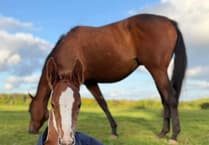
Anyone who has spent time on Dartmoor will know that the Dartmoor ponies are part of what makes it special.
They are one of the most recognisable symbols of the National Park. Indeed, they are immortalised in the Dartmoor National Park logo. That is why so many people have been concerned by recent reports about their future. But this debate is about far more than ponies.
Plenty of MPs who represent urban constituencies have taken an interest in Dartmoor’s ponies. That’s understandable.
But what they fail to mention is the wider issue facing the farmers I represent who live on Dartmoor and whose very existence is to steward and sustain the landscape. It is these farmers and commoners who are facing new stocking levels of all livestock -cattle, sheep and ponies – which threaten their livelihoods.
Sustainable farming on upland landscapes is key to maintaining a thriving Dartmoor, but it relies on financially sustainable populations of cattle, sheep and ponies. The current levels set out by Natural England make it unaffordable to farm, which means limited livestock at all on the Moor.
This argument is not new. Similar concerns were raised in 2022 and 2023 when Natural England proposed significant reductions in grazing livestock on parts of Dartmoor.
Farmers, commoners and local communities warned that the proposals risked undermining the very system that has shaped the moor for centuries.
In response, the previous Conservative Government commissioned the independent Fursdon Review. A broader conversation was needed about the future of Dartmoor. That review led to the creation of the Dartmoor Land Use Management Group, bringing together farmers, conservationists, landowners and public bodies to develop a long-term vision for the moor.
That work is still ongoing so the question is, why are Natural England attaching their own livestock stocking targets to farming subsidies before that process has reached its conclusions?
Nobody is suggesting that anyone wants to get rid of Dartmoor’s ponies. The concern is about the knock-on effects. If overall livestock numbers are reduced significantly, and ponies are counted within those limits, commoners will inevitably face difficult decisions about what they can continue to keep on the moor.
I welcome the news that the government claims to recognise that ponies should be counted separately. However, I remain deeply concerned that the new Environmental Land Management Scheme and other similar payments – relied upon by many Dartmoor farmers - will only be paid if farmers halve their livestock numbers.
The consequences would stretch far beyond the ponies themselves. Farms need to remain viable. If farmers and commoners are forced to reduce livestock numbers to the point where businesses become unsustainable, it is not just the future of the ponies that is at risk, it is the future of the farming communities that have helped create the Dartmoor landscape we value today.
We all want to see Dartmoor’s environment protected and enhanced. The Dartmoor Land Use Management Group should be allowed to finish the job it was established to do.
Dartmoor deserves a long-term plan that supports farming and protects the landscape we all care about.
Comments
We've recently changed our login process. If you have an account for commenting, you will need to re-register on the login window.
This article has no comments yet. Be the first to leave a comment.