
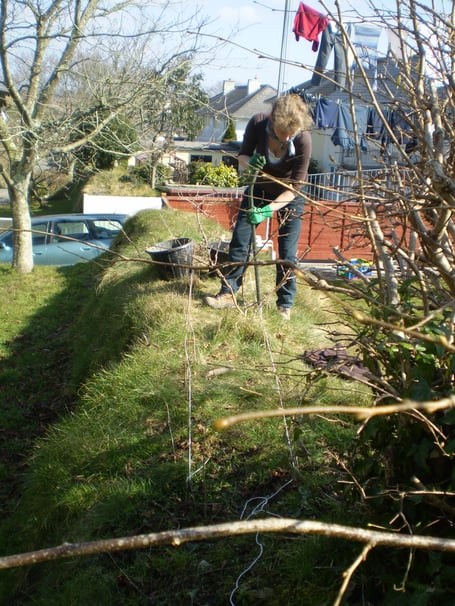
It is five years since the Nature Diary in which I shared the journey of our garden’s boundary banks from grassy, treeless features to the first hedge-laying of thriving native trees, planted as whips in winter 2009-10. It has been a labour of love to restore these stone-based Devon banks; repairing collapsed sections, encouraging a more diverse flora, and monitoring the creatures which have increasingly used it for shelter, food and to raise their young.
Over the years, I have accumulated a useful array of tools suitable for this strenuous job, not least, the right clothing! I determined start before Christmas with the end of February as my deadline, working whilst trees were dormant and before the birds got too excited about breeding: that meant it was pretty cold. From hard experience, I have perfected layering different gloves for both warmth and protection, especially when it comes to brambles, hawthorn and blackthorn, all of which demand tough leather. Stout boots, non-precious jackets, over-trousers and a cosy hat with peak to shade out the low winter sun complete my attractive ensemble. The second most important tool for me is a handy set of wooden steps, rather like the ones you have for a child’s bunk bed. These are essential to access the tops of the steep banks, some parts of which are well above my head height. Pruning saw, loppers, secateurs, a mallet, and a bucket to keep them all in are my kit of choice.


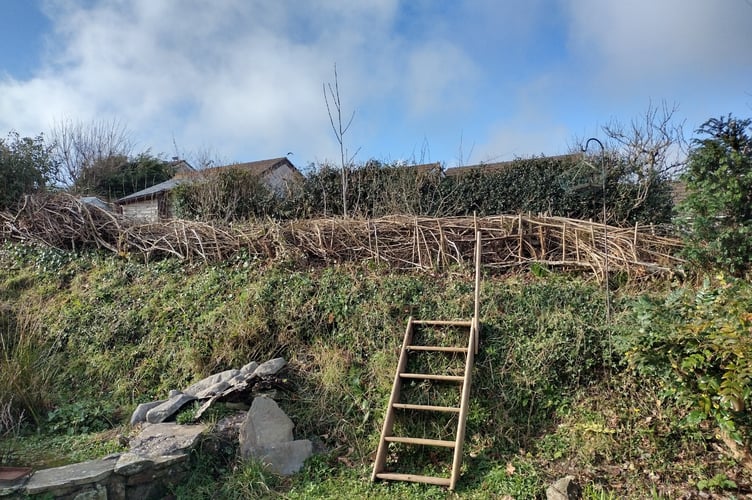
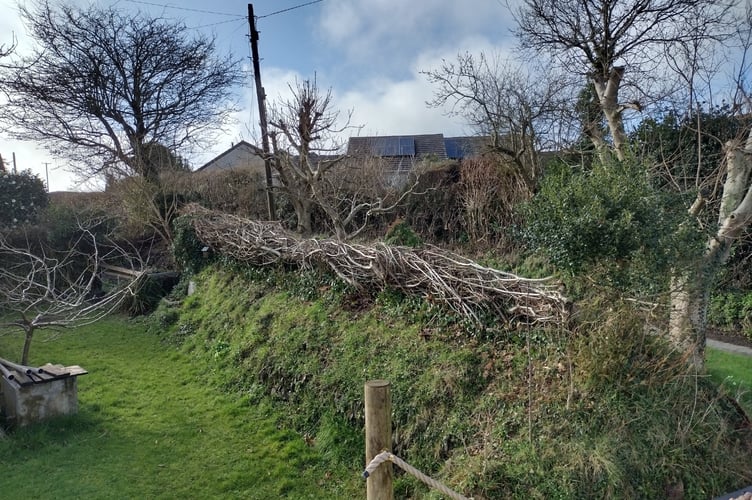
The basic process of hedge-laying is simple. It involves partial cutting through the vertical stem of a tree or shrub so that it can be bent horizontal and secured. Careful judgement in cutting ensures that both parts remain connected to the roots so that the cut stub and the horizontal ‘pleacher’ send up new shoots in the spring. Repeating this along the hedge, banging in cut stakes at intervals to hold the laid material in place, gradually creates a complex basketwork along the length of the bank. It is a deeply absorbing activity, requiring careful judgement about which stems to bend, which to coppice-cut and use for stakes (hazel is good for this); also learning the different degrees of brittleness between species. Generally, stems are bent uphill and there are many regional and characteristic styles of hedge-laying. Mine does not conform to anything in particular, nor would it win any style awards, but it has transformed the towering, leafy, linear forest into a tightly-woven woodland corridor which will provide shelter, protection and safe passage once the leaves break through. It’s pretty much the hedgerow equivalent to giving an unruly mop of hair a decent haircut and twisting it into a French plait: much neater, with the added benefits of reduced shading and being more appealing to nesting birds (the hedgerow, that is).
On a recent familiar walk, I entered a hilltop field, usually occupied by livestock (sheep and often cattle too) where, on sunny summer days, sheep would huddle in small groups, eroding dusty hollows along the boundary bank’s base as they sought shade. In between leggy hawthorn and other shrubs, great gaps had been worn away, rendering the hedge useless in terms of stock-proofing. Now that was changing. At least one person had been hard at work and done a very professional looking job of laying a section of long over-stood hedgerow trees to create a dense, living-brushwood barricade. I am excited to see how it will develop over the coming seasons.
Hedges and dry-stone walls are such important traditional features in our landscape and much utilised by wildlife. I have already mentioned their direct use for shelter, food, breeding, and as corridors for safe transit between places; they also serve as navigational landmarks, as territorial boundaries, and have significant impact on air currents and microclimate patterns around them.
My winter project served me brilliantly as an incentive to get outside and do some practical, physical exercise. I managed to avoid injury, aside from the inevitable scratches, until the very last couple of metres when I accidentally dropped the mallet and it bounced off a springy hazel stem, rebounding to wallop me in the mouth. As the metallic taste of blood coursed in, I checked my teeth – phew! All was well. I am grateful to my pilates teacher, Gill, for helping me to stay supple and strong enough to cope with all the stretching, balancing and stamina required. Working five or six feet up along a narrow ledge with sharp tools may not be something I will repeat too many more times in my life!
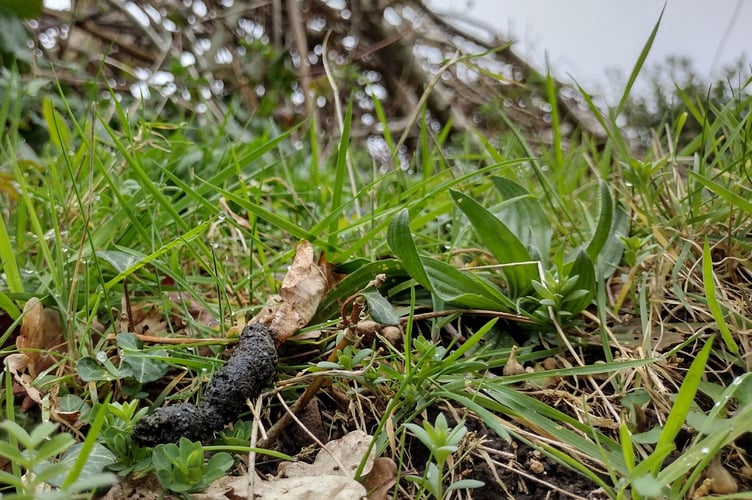
And now, dogwood and honeysuckle are in leaf, and bluebells, pushing glossy leaves through the network of twigs. Our rejuvenated hedges are alive with birds and insects and yesterday, I found evidence of a large hedgehog too. Proper job!
Comments
This article has no comments yet. Be the first to leave a comment.