
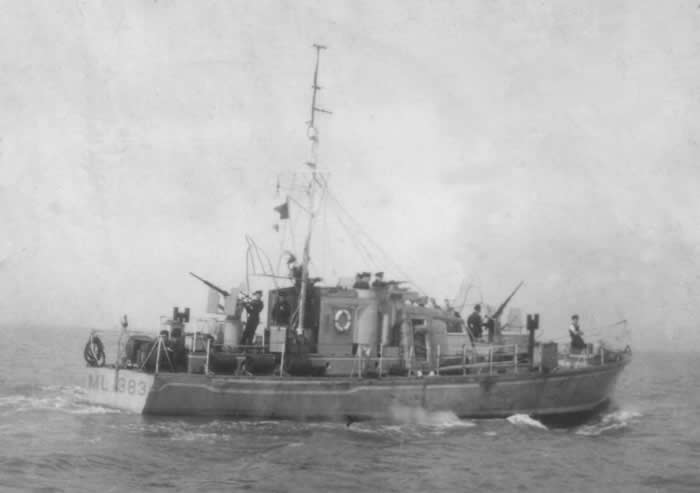
Dartmouth's Coastal Forces Heritage Weekend returns from Friday 8 May to Sunday 10 May 2026, marking the 81st anniversary of VE Day with ship tours, expert talks and a rare chance to explore the town's secret wartime history.
There will be an opportunity to step aboard the last operational 70ft Harbour Defence launch, HMS Medusa. Hear about the vital missions of the Coastal Forces Flotillas based in Dartmouth; visit the Coastal Forces exhibition at Dartmouth Museum, and soak up the atmosphere in Kingswear, where the Free French were based, and HMS Cicala can still be seen.
In the early years of the Second World War, Dartmouth became an unlikely base for some of the Royal Navy’s most daring fighting forces.
While many know of the town's role in the D-Day preparations, there is a little known and, in some cases, "secret" history, of fast boats and midnight raids, that is only now being fully told.
Coastal Forces began the war from almost nothing, but by 1943, they had grown into a formidable striking arm.
Operating in small flotillas of six to eight boats, these crews - overwhelmingly young volunteers of the Royal Naval Volunteer Reserve (RNVR) - carried out dangerous missions, usually under cover of darkness.
Life aboard these vessels was a mix of long, tense waits and short, violent engagements.
The evolution of the fleet saw a shift from slower Motor Launches used for anti-submarine and convoy patrols to the faster, more aggressive Motor Torpedo Boats (MTBs) and Motor Gun Boats (MGBs).
These boats were lightly built and heavily armed, with torpedoes, anti-aircraft guns, or 2lb PomPom guns: highly effective against German E Boats, armed trawlers and merchantmen.
Established in 1941, Dartmouth was one of 14 Coastal Forces bases guarding South and East Coastline.
The HQ was originally in the Yacht Club Hotel, Dartmouth, known as Britannia III.
Following bombing damage in 1942, operations moved across the river to Kingswear, to the Royal Dart Hotel, which was eventually commissioned as HMS Cicala.
Over a dozen flotillas passed through our harbour, but two left an indelible mark:
The 7th Motor Launch Flotilla: These crews played a vital role in the St Nazaire Raid (Operation Chariot), one of the war's most daring commando operations, where many boats were destroyed under intense fire.
The 23rd MTB Flotilla: Manned by Free French sailors based in Kingswear, they carried out ambushes in the heavily defended waters off the Channel Islands.
Legendary Figures: The famous Robert Hitchens, the most highly decorated officer in Coastal Forces, commanded the 8th MTB Flotilla from Dartmouth in 1942 before losing his life in action at just 29 years old.
Highlights of the weekend include the chance to visit the Harbour Defence Launch HMS Medusa open between 11am and 4pm daily.
Enjoy expert talks at The Flavel about the build-up of coastal forces and their operations in Dartmouth at 5.30pm on the Friday and four deep-dive sessions on different aspects at 10.30am on the Saturday. Details at: https://www.flavel.org.uk
Dartmouth Museum will be showing a film on the achievements of the 15th Flotilla and you can visit Kingswear to learn about the operations of the Free French.
Comments
This article has no comments yet. Be the first to leave a comment.