
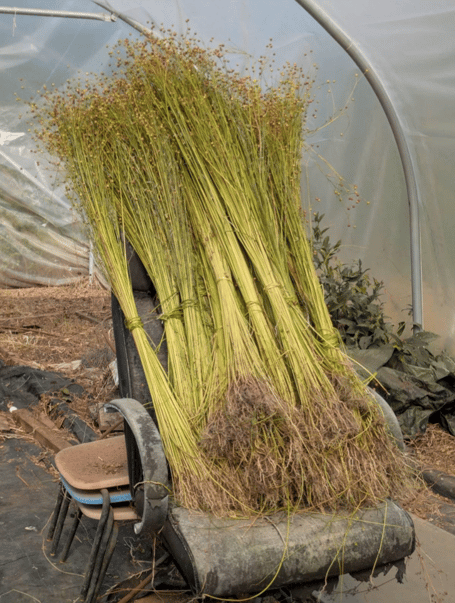
A forgotten chapter of Devon’s industrial and agricultural history is set to be revived after a community heritage project secured a major six-figure funding boost.
The Devon Grows Flax project — a collaborative initiative between Transition Town Totnes and Liflad CIC — has been awarded a £116,000 grant from The National Lottery Heritage Fund.
The funding aims to uncover, revive, and permanently embed the county's lost flax culture back into local communities.
While Devon is historically renowned for the wool trade that once drove its economy, its connection to linen production has largely faded from living memory.



Flax, the plant from which linen is made, was once commonly grown across the county. According to experts, it was a vital crop used to produce an array of essential goods, including linen cloth, sails, twine, paper, and linseed oil.
From the late 1700s to the early 1800s, a dedicated flax mill operated in Tuckenhay, near Totnes.
The mill worked continuously to meet the high demand for linen, yarn, and sailcloth required by the nearby naval port of Plymouth.
Today, however, little of this past is known, and flax processing features on the national endangered crafts list.
Organisers warn that these historic skills and regional stories are at serious risk of being lost forever.
Following a successful pilot scheme titled Totnes Grows Flax, the new funding will support people of all ages to cultivate the plant in gardens, allotments, schools, and communal land, nurturing it from seed to harvest.
The project aims to reconnect communities through the shared experience of heritage skills.
A series of public events and workshops will be organised, including tool-making sessions to build processing equipment, and spinning workshops where participants will collectively weave a uniquely Devon-made cloth.
Project organisers are also working closely with teachers to introduce flax growing and processing into Key Stage 1 and Key Stage 2 classrooms.
A specialized "flax in schools" education pack will combine the subject with History, Design & Technology (DT), and Science.
To expand the project’s reach, organisers are searching for volunteer ‘Flax Ambassadors’ who will receive full training to run their own community flax projects.
Volunteers are also being recruited for a heritage research team to track down Devon’s historic flax growers, "flax dressers," and weavers.
Beyond this, a dedicated spinning group is being hosted by The Wool Hub CIC in Buckfastleigh.
Over the course of a year, volunteers will be trained by flax experts Simon Cooper, from Flaxland in Stroud, and renowned Truro-based spinner Amanda Hannaford, culminating in the creation of a Devon Linen cloth.
The project will conclude in 2027 with a touring exhibition showcasing past and present flax production, giving communities across the county a chance to celebrate their work.
Those interested in volunteering as an ambassador, joining the research team, or attending upcoming events can find more information by visiting: https://www.transitiontowntotnes.org/project-groups/devon-grows-flax
Comments
We've recently changed our login process. If you have an account for commenting, you will need to re-register on the login window.
This article has no comments yet. Be the first to leave a comment.